|
Waterford Birds www.waterfordbirds.com |
|
Site guide: Coolfin / Portnascully |
 |
|
 |
|
||
|
Coolfin / Portnascully
Grid reference: S41/S51 - S4814 (Coolfin) east to
S5012 (Portnsacully)
Ordnance Survey Discovery map: # 75
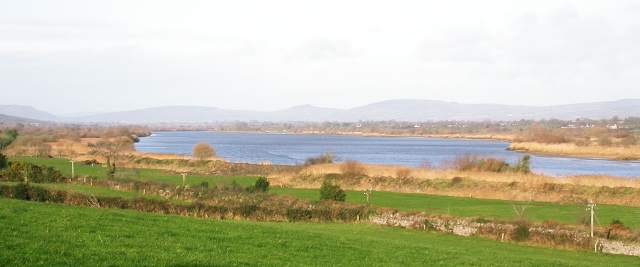
Habitat: River Suir, adjacent pasture and marshes. Main interest: Wintering Greylag Geese and other
wildfowl.
Regular/annual: Greylag Goose, Whooper Swan, Little
Egret, White-fronted Goose, Teal, Golden Plover, Lapwing, Snipe, Green Sandpiper, Stonechat, winter thrushes.
Scarcer species & rarities: Barnacle
Goose, Pink-footed Goose, Green-winged Teal.
Access: From Waterford City, turn right for Portlaw beyond Kilmeadan on the main Waterford-Cork road, about 11 km out. Five km further on, veer right for Carrick-on-Suir (left for Portlaw) and the Coolfin fields are on the right hand side of the road, just over the first bridge. However, relatively few birds use Coolfin itself nowadays, perhaps reflecting more intensive grazing by sheep and cattle. Preferably, first stop at the farm gateway about a mile further east of Coolfin, and scan the river and the fields at Portnascully on the Kilkenny side. Many of the Greylag Geese feed at Portnascully nowadays, or on in the fields near Derrigal cross-roads, on the Waterford side, immediately east of Coolfin. Also check the tributaries at each end of Coolfin for duck and other species. Further details: The Coolfin/Portnascully area holds one of the largest wintering flocks of Greylag Geese in Ireland. From late October to early April, 200-400 birds are regular here, with over 600 on occasion. If birds are present on the Waterford side, on the Coolfin and Derrigal marshes and fields, good views can often be had from the roadside, even from a car-window. Apart from Greylags, Greenland White-fronted Geese occur in some winters, and there are also several records of Barnacle and Pink-footed Geese. Whooper Swans also winter, but Bewick’s Swan is much less frequent. Since the early 1990s, Portnascully, on the Kilkenny shore, has often held most of the Greylags, and, more recently, other fields on the Kilkenny side have held feeding geese. Unfortunately, this has made it more difficult to obtain good views or complete counts. Some Greylags also feed in fields near Tibberoughney Bog, further upriver (see site-account). Good numbers of Lapwing and Curlew are usually present , and Golden Plover are fairly regular in late autumn and winter. Dozens of Snipe can be flushed from the riverside fields east of the reserve, and small numbers of Woodcock feed at night. Green Sandpipers probably winter annually, and are best seen at the tributaries at Clodiagh Bridge and Derrigal cross-roads. Duck species are usually confined to the River Suir and its tributaries, and are best viewed from the Waterford side shore opposite Portnascully, although complete counts are difficult. Teal are the main species, but Tufted Duck, Goldeneye, Mallard, Pochard and even Green-winged Teal, Scaup and Shelduck have occurred. Clodiagh Bridge will usually provide good views of a few Teal. This can also be a good spot for Kingfisher, and several warbler species are usually present in summer. Notable passerines in winter include Long-tailed Tit, which are regular along the roadside hedges, and the winter thrushes (Fieldfare and Redwing). Not far east of Coolfin, Pouldrew, or Stonehouse Lake, usually holds a few Mallard and Teal in winter. Treecreepers are regular, and in summer Chiffchaffs and Blackcaps; Mute Swans also breed. Blackcaps, Jays and a range of other passerine species also breed in the woodlands above Coolfin and around Portlaw. The nationally important oakwoods near Portlaw, including Curraghmore Estate, are semi-natural and are regenerating freely; there are distinctive bird species present and the stream through the estate holds several pairs of Dipper. Another prominent breeding species in the Portlaw woods is Woodcock, with its conspicuous ‘roding’ flight at dusk. Long-eared Owls also breed, among conifers, and are best located by listening for the distinctive ‘rusty hinge’ calls of chicks on calm nights in June. |
||
|
|
|
|
|
|
|
|
Coolfin / Portnascully
|